The Key to Dreams: A Surrealist Revelation at Fondation Beyeler
This spring, one exhibition stood out above all others for me: The Key to Dreams at Fondation Beyeler in Basel. A captivating journey into the world of Surrealism, the show features around 50 masterpieces from the Collection Hersaint and brings together a stunning lineup of iconic artists — Salvador Dalí, René Magritte, Joan Miró, Pablo Picasso, Man Ray, Dorothea Tanning, Balthus, and more.
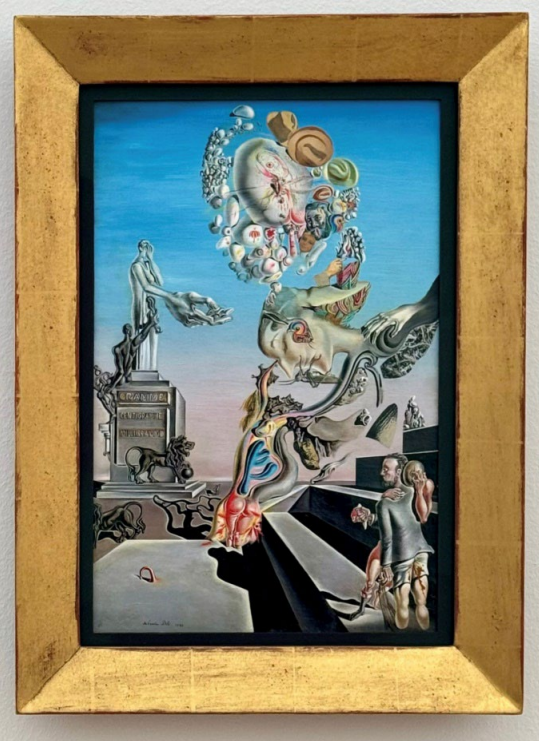
The Lugubrious Game (1929), Salvador Dalí
Oedipus Rex (1922): Freud, Myth, and the Bird-Man
Ernst’s Oedipus Rex exudes a deeply Freudian atmosphere. The title alone places it within the psychoanalytic world of myth and repression, and the image itself is haunting — enigmatic and rich with symbolism. The painting reflects Ernst’s complex inner life and his fascination with birds, which he linked to a formative childhood experience. In 1906, on the night his pet parrot died, Ernst’s sister was born — an event he later described as creating "a dangerous confusion between birds and humans that became encrusted in my mind." This obsession gave rise to Loplop, his mythical alter-ego — a demonic man-bird who would appear repeatedly in his work. In Oedipus Rex, we see a figure seemingly severed from its own head, suggesting a psychological rupture — a detachment from reason and a longing to reconnect with primal instinct, dreams, and forbidden desire. It’s a deeply personal image disguised as myth, layered with irony and visual poetry.
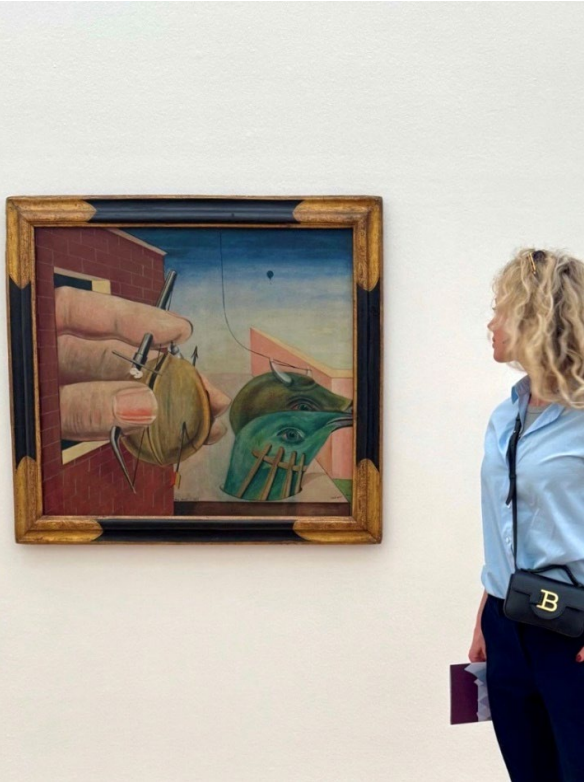
Oedipus Rex (1922), Max Ernst
The Fireside Angel (The Triumph of Surrealism) (1937)
In stark contrast to the intimate psychodrama of Oedipus Rex, The Fireside Angel is a brutal, externalized vision of destruction. A monstrous, flailing figure storms across a mountainous landscape, terrifying and almost comically grotesque. Painted as the Spanish Civil War erupted and fascism spread across Europe, the piece is Ernst’s dark prophecy of what lay ahead. Ernst gave the work a deliberately ironic title, later explaining: "This is obviously a highly ironic title for a sort of wild creature that wrecks and devastates everything that gets in its way. At the time, this was my impression of what would likely unfold in the world — and I may well have been proven right." For Ernst, Surrealism was not just a style but a way to confront a world on the brink. His work here is urgent, political, and emotionally raw — a Surrealist response to historical trauma that feels eerily relevant even today. What sets Max Ernst apart is his relentless experimentation. He constantly invented and reinvented his techniques, exploring collage, frottage (rubbing), grattage (scraping), decalcomania, oscillation, and dripping — often letting chance dictate form. In one early grattage painting from 1925, a swirling flock of birds emerges from layered pigment and scraped textures — an elegant chaos of color and form. His frottage technique, which began when he observed the grain of a hotel’s wooden floor, was an attempt to draw out hidden symbolism from everyday surfaces: "I decided to investigate the symbolism of this obsession." Ernst was not only an innovator — he was also one of Surrealism’s most exquisite colourists. His mastery of tone and texture brought emotional depth and visual mystery to everything he created. Ernst’s personal life was as dramatic and richly layered as his paintings. His romantic relationships — often with brilliant, powerful women — shaped his art and mirrored the psychological intensity of his work. The Fireside Angel (1937), Max Ernst His first wife, Luise Straus, a German academic and art historian, left him after he became entangled in a torturous love triangle with the French poet Paul Éluard and Éluard's wife Gala — who later married Salvador Dalí. In 1927, Ernst eloped with the emotionally fragile painter Marie-Berthe Aurenche, only to leave her for the gifted and fiercely independent Leonora Carrington, a young British Surrealist with whom he shared a passionate and creatively fruitful partnership. Their bond was eventually broken by the chaos of World War II, but Carrington remained one of the most significant Surrealist voices in her own right. These women were not merely muses — they were intellectual equals, artistic collaborators, and powerful forces in their own creative spheres. Ernst’s relationships often walked the line between inspiration and destruction, adding another layer of complexity to both his art and life. Through Ernst’s surreal worlds — filled with myth, obsession, political fear, and visual experimentation — we’re reminded that Surrealism wasn’t just about escaping reality. It was about understanding it more deeply through symbols, dreams, and desire. The crazier the world became, the more Surrealism triumphed — and few artists embodied that paradox better than Max Ernst.
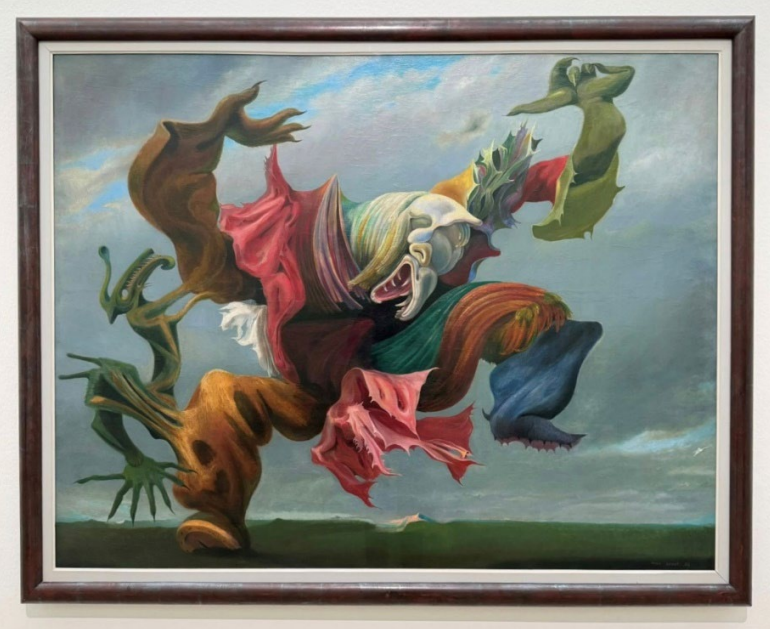
The Fireside Angel (1937), Max Ernst
